Critical Lenses
Ways to think differently about a text—not labels to attach to it.
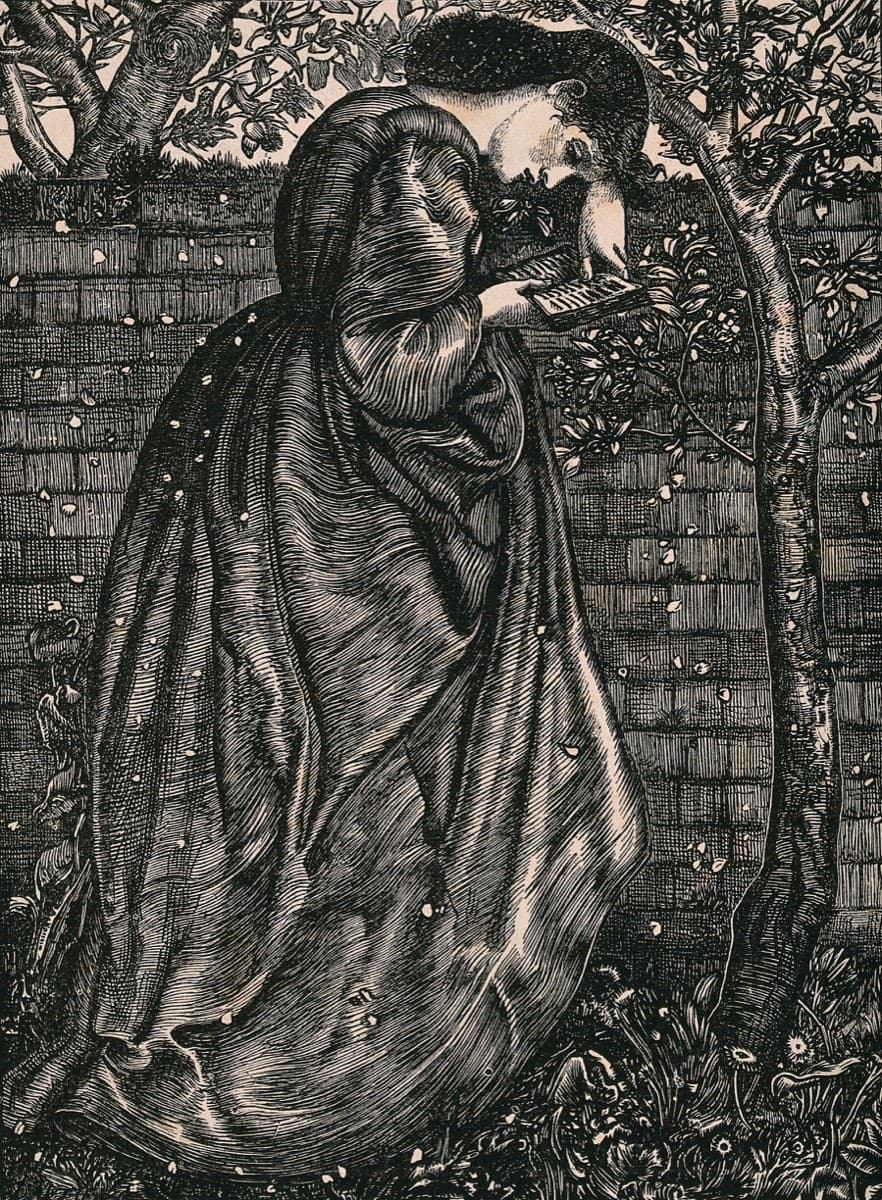 REVERIE
Begin with something the text makes you notice. Borrow a question from a perspective, test it against precise evidence, and ask what it reveals or leaves out. Move between approaches when useful; you do not have to choose one and stay there.
The short examples below are invented teaching illustrations. They model a question and a possible inference, not conclusions to transfer to every text.
- Notice: identify a detail or pattern.
- Ask: try a question that makes you see it differently.
- Test: find supporting and complicating evidence.
- Reconsider: what would another perspective reveal?
Classroom approaches
Feminist and gender criticismWhose voice, work, and freedom are valued?
Examines how gender affects who has power in a text: who speaks, who is believed, whose labor matters, and which roles appear natural. Gender interacts with class, race, sexuality, and other forms of power; there is no single universal experience of womanhood.
What might this help us notice?
- Who gets to name, judge, or interrupt whom?
- How do narration, dialogue, or plot reward and punish gender expectations?
- Whose apparently ordinary work makes other characters’ freedom possible?
Try the perspective
A story calls a father’s job ‘work’ but describes a mother’s unpaid labor as ‘helping.’ The unequal naming may make one contribution visible while treating the other as a duty. Check whether the narrator endorses that distinction or exposes it.
What might this reading overlook?
Do not equate a character’s prejudice with the text’s position, or assume every woman has the same interests. Attend to irony and differences between characters.
Read further
- bell hooks — Berea College ↗
A biographical introduction to a thinker who connects gender, race, class, and education.
- Open Yale Courses · Paul Fry, lecture 20 ↗
A university-level lecture with transcript for deeper exploration.
Queer theoryHow does the text make some identities and desires seem normal?
Asks how expectations about gender and sexuality shape which identities, desires and relationships people recognize or accept. It can examine silences, unstable identities, and expected life paths, not only explicitly LGBTQ+ characters. For Judith Butler, performativity describes how repeated actions reproduce gender expectations. It does not simply mean choosing a costume or pretending.
What might this help us notice?
- What relationships or futures are treated as inevitable or legitimate?
- Where do language, roles or desires challenge a binary—a simple either/or category?
- Who must conceal, explain, or repeatedly prove their identity?
Try the perspective
A narrator repeatedly calls marriage the ‘natural ending’ even as a character’s closest attachment falls outside that plot. A queer reading could test the pressure created by that repeated phrase without declaring the character’s sexuality as a fact.
What might this reading overlook?
Do not diagnose an author’s or character’s identity from ambiguity. A reading needs patterns in form and language, not just a label for a person.
Read further
- Judith Butler — UC Berkeley ↗
Research biography and publications, including Gender Trouble and Bodies That Matter.
- Open Yale Courses · Paul Fry, lecture 23 ↗
A university-level lecture with transcript for deeper exploration.
Marxist and class criticismWho owns, who works, and who benefits?
Investigates how economic relationships and class power shape the world presented in a text. Ideology means assumptions that can make a social arrangement feel natural or deserved. Look at property, labor, consumption, and the values attached to them, alongside the text’s form.
What might this help us notice?
- Who controls resources, and whose labor remains unseen?
- How does the text explain poverty or privilege?
- Does the ending resolve a social conflict, hide it, or leave it open?
Try the perspective
A mansion is described as ‘self-sufficient,’ while servants appear only as hands carrying trays. That contrast could conceal the labor sustaining its luxury. Test whether the narration itself draws attention to the workers being left out.
What might this reading overlook?
Do not reduce every motive to money or treat class as a character’s complete identity. The text may resist the tidy social argument you expect.
Read further
- Terry Eagleton — Lancaster University ↗
Literary scholar’s profile and publications; a route into Marxist literary criticism.
- Open Yale Courses · Paul Fry, lecture 18 ↗
A university-level lecture with transcript for deeper exploration.
Postcolonial criticismWho has the authority to represent a place or people?
Examines colonial power and its continuing effects on representation, language, identity, and belonging. ‘Postcolonial’ does not mean that colonial relationships simply ended. Notice who is made familiar or strange, who can speak, and whose knowledge counts.
What might this help us notice?
- Whose perspective defines what is civilized, foreign, or normal?
- How are naming, translation, accent, and silence used?
- Where does the text reproduce, negotiate, or resist imperial assumptions?
Try the perspective
A travel narrator calls an inhabited valley ‘undiscovered.’ The word centers the visitor’s knowledge and erases the residents’ relationship to the place. Its significance depends on how the rest of the text positions that narrator.
What might this reading overlook?
Avoid treating a culture as uniform or assuming every encounter across cultures is colonial. Establish the relevant historical relationship rather than importing one.
Read further
- Edward Said — Columbia University ↗
Biographical context and resources for the author of Orientalism.
- Open Yale Courses · Paul Fry, lecture 22 ↗
A university-level lecture with transcript for deeper exploration.
Psychoanalytic criticismWhat pressures emerge through repetition, displacement, or silence?
Explores desire, conflict, repression, and the limits of self-knowledge. A narrator may reveal more than they realize or admit. Repeated images, contradictions, dreams and noticeable omissions can reveal conflicts beneath their explanation.
What might this help us notice?
- What does a speaker insist on denying or explaining away?
- Does an emotion become attached to an apparently unrelated object?
- What returns despite a character’s effort to dismiss it?
Try the perspective
A narrator insists that a locked room means nothing, then repeatedly describes its door. The mismatch between dismissal and attention may suggest an unresolved conflict. It does not establish a clinical diagnosis.
What might this reading overlook?
Fictional characters are not patients. Do not diagnose people or turn every object into a fixed symbol; test a pattern within this particular text.
Read further
- Sigmund Freud — Freud Museum London ↗
An accessible biography and introduction to psychoanalysis; literary use is distinct from clinical practice.
- Open Yale Courses · Paul Fry, lecture 12 ↗
A university-level lecture with transcript for deeper exploration.
Formalist approaches and close readingHow do the parts of the text create its effects?
Examines the relationship between form and meaning: diction, pattern, structure, perspective, ambiguity, and contrast. Formalist traditions differ, and close reading is also used by the other approaches here. It is a way to test an interpretation, not a hunt for named devices.
What might this help us notice?
- Which patterns recur, shift, or break?
- How does the ending change the meaning of an earlier detail?
- How do several choices work together rather than separately?
Try the perspective
A poem repeats a regular sentence pattern until its final line breaks off. That break in the pattern may convey a loss of control, but the surrounding language must support the claim. ‘Enjambment creates flow’ would not explain this specific effect.
What might this reading overlook?
Do not assume every detail fits one interpretation. Historical conditions and social relationships can matter even when your first attention is on form.
Read further
- I. A. Richards — Poetry Foundation ↗
A biography of a critic associated with practical criticism and the development of close reading.
- Open Yale Courses · Paul Fry, lecture 6 ↗
A university-level lecture with transcript for deeper exploration.
Further perspectives
Additional ways into a text, if they help you ask a productive question.
Reader-response approachesHow does meaning develop through the act of reading?
Examines how readers make meaning through expectations, experience, and the sequence in which information arrives. A response is a starting point for investigation, not proof that every interpretation is equally supported.
What might this help us notice?
- When did you revise your judgment, and what prompted that change?
- What expectation does the text invite before challenging it?
- Which assumptions might another reader bring?
Try the perspective
An unnamed speaker sounds reassuring until the final line identifies them as a jailer. Trace which earlier words now acquire a different meaning, rather than stopping at ‘I was surprised.’
What might this reading overlook?
Personal association can pull attention away from the text. Explain which choices invite a response and which assumptions you brought yourself.
Read further
- Open Yale Courses · Paul Fry, lecture 16 ↗
A university-level lecture with transcript for deeper exploration.
EcocriticismWhat relationships connect people, places, and nonhuman life?
Examines representations of environments and relationships between human and nonhuman life. It can ask who or what is harmed by a way of life. Nature need not function only as a symbol for a human feeling.
What might this help us notice?
- Is a landscape treated as home, resource, threat, or empty space?
- Whose perspective makes environmental damage visible or invisible?
- How do animals, weather or the physical surroundings affect what happens?
Try the perspective
A factory’s smoke is called ‘progress’ upstream, while downstream residents describe stained washing. The contrast could show how people’s views of industry depend on whether they suffer its environmental damage.
What might this reading overlook?
Do not assume a landscape description is an environmental manifesto. Consider scale, history, and the text’s actual language.
Read further
- ASLE-UKI — the field today ↗
The scholarly association’s introduction and routes into environmental humanities research.
Feedback about this page
How was this page?
No writing or contact information is sent. One vote per page each day.